2026 YAC 국제 공모전에서 Oceanic Parliament를 주제로 ADL 안정우, DSL 이현희 연구원이 Finalist에 올랐습니다.
지도교수: 이상윤 교수님(안정우 연구원), 이대송 교수님(이현희 연구원)
<주최>
Young Architects Competitions
Floating On Waste
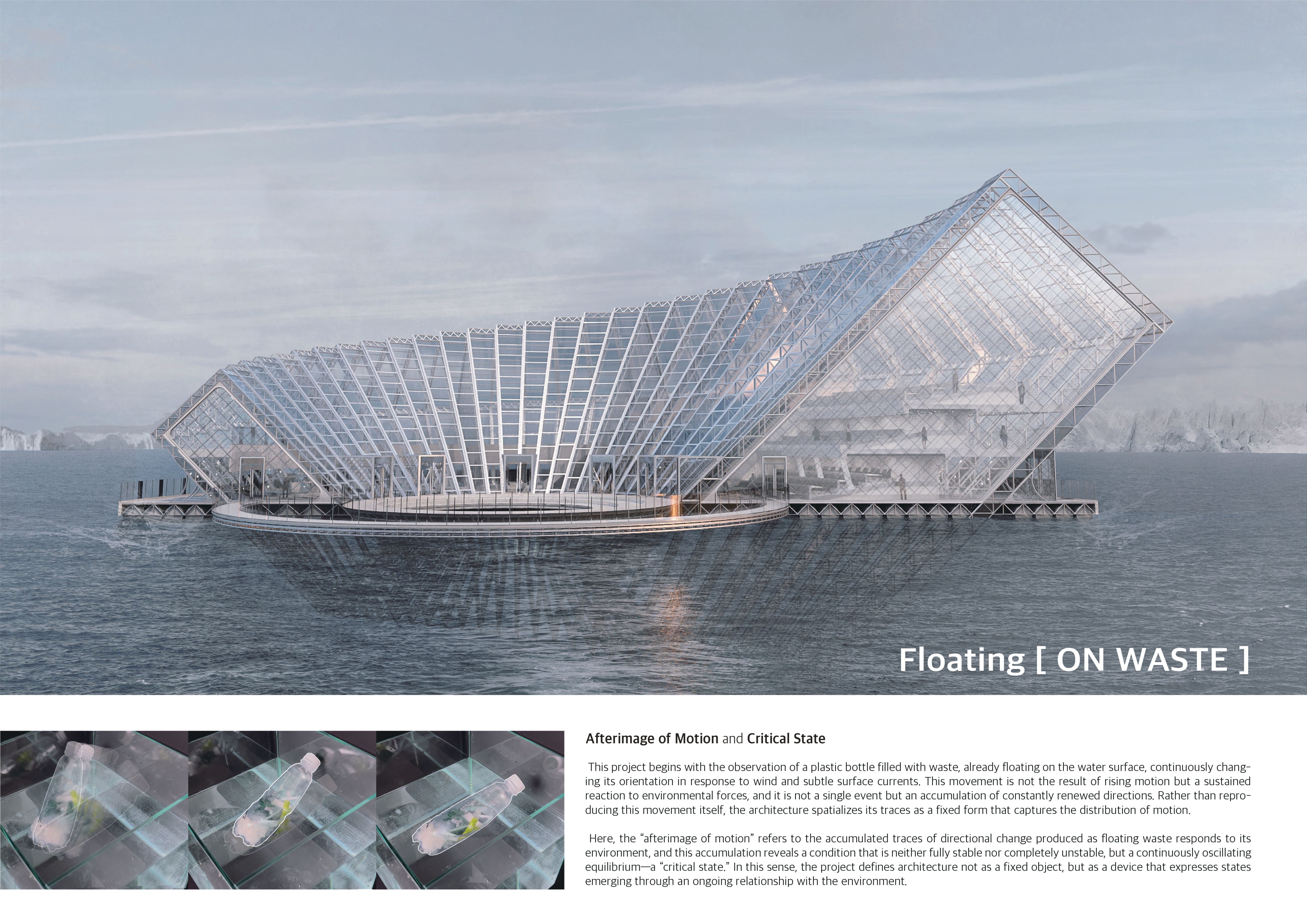
이 프로젝트는 물 위에 떠 있는, 내부에 쓰레기가 채워진 플라스틱 병에 대한 관찰에서 시작된다. 이 병은 바람과 미세한 수면의 흐름에 반응하며 물 위에서 지속적으로 방향을 바꾸며 움직인다. 이러한 움직임은 부력에 의해 상승하는 단일한 사건이 아니라, 주변 환경에 대한 반응 속에서 끊임없이 갱신되는 방향 변화로도 해석할 수 있다.
Floating on Waste는 이러한 움직임 자체를 재현하기보다, 그 흔적을 공간화하는 방식으로 접근한다. 건축은 수면 위에서 발생하는 방향 변화의 분포를 포착한 형식으로 구현되며, 이를 통해 복합적인 환경 속에서 형성되는 운동의 흔적을 물질적 형태로 드러내고자 하였다. 여기서 운동의 잔상이란 부유 쓰레기가 주변 환경에 반응하며 만들어내는 방향 변화의 축적된 흔적을 의미하며, 이는 완전히 안정되지도 불안정하지도 않은 임계 상태이다.
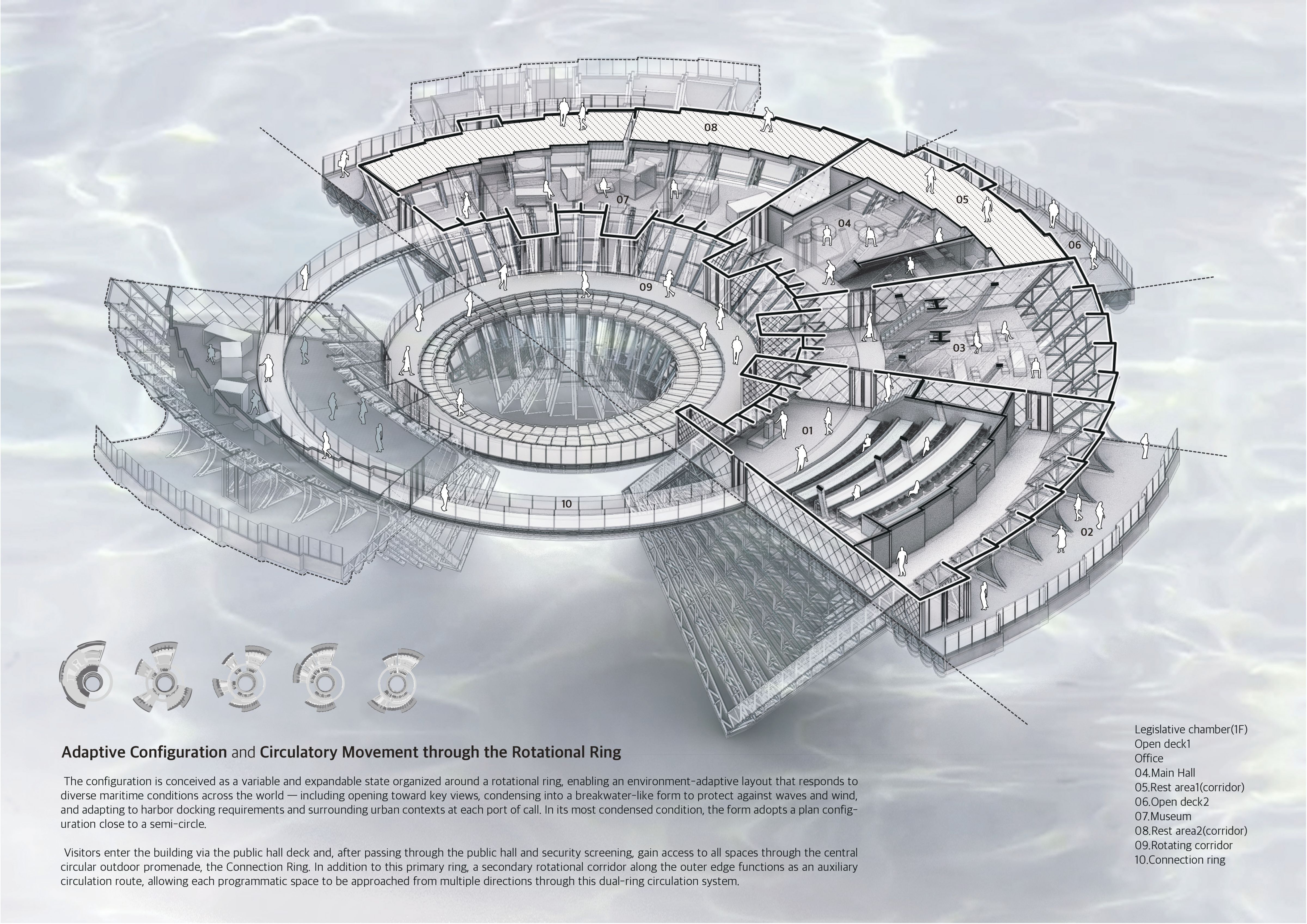
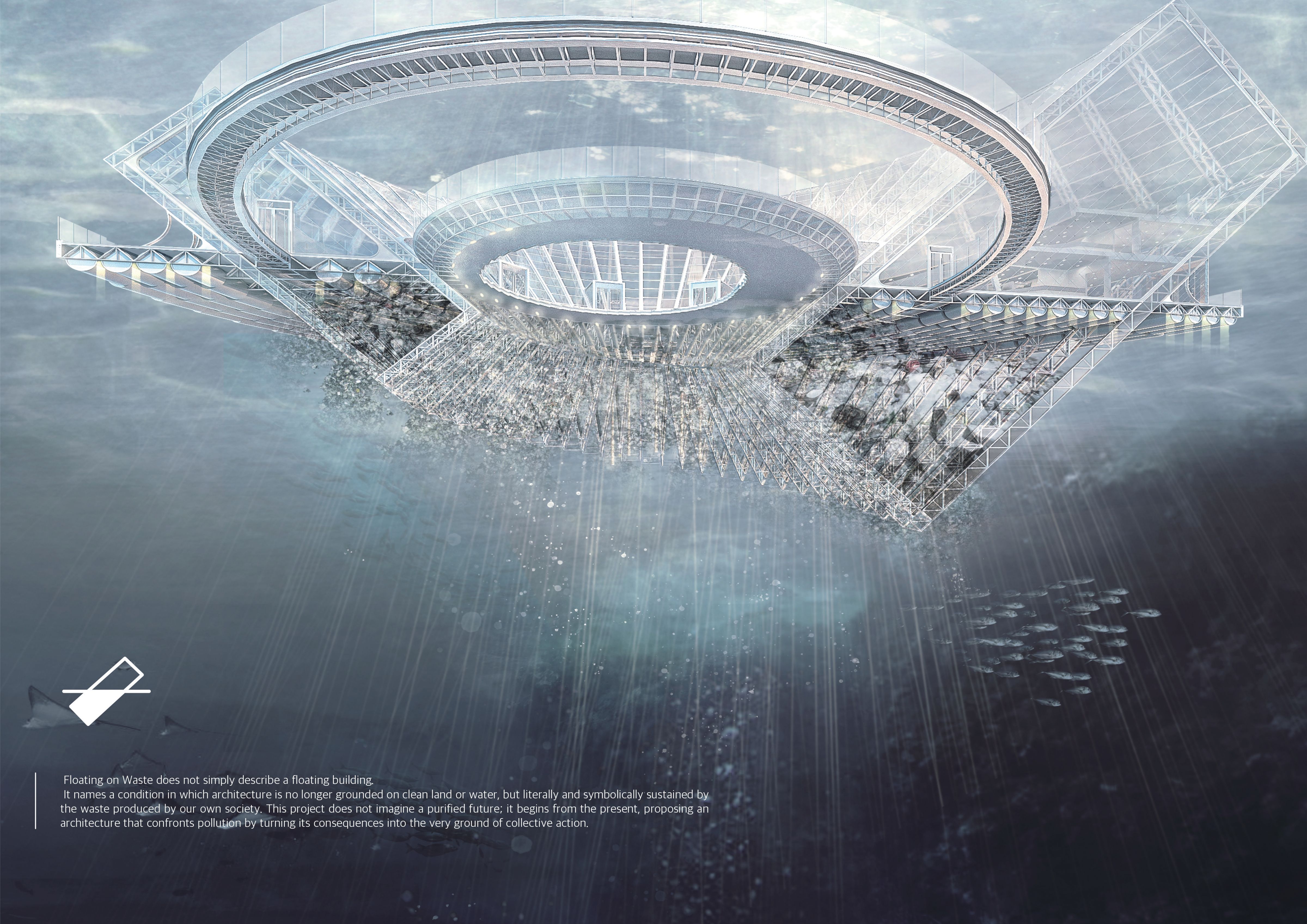
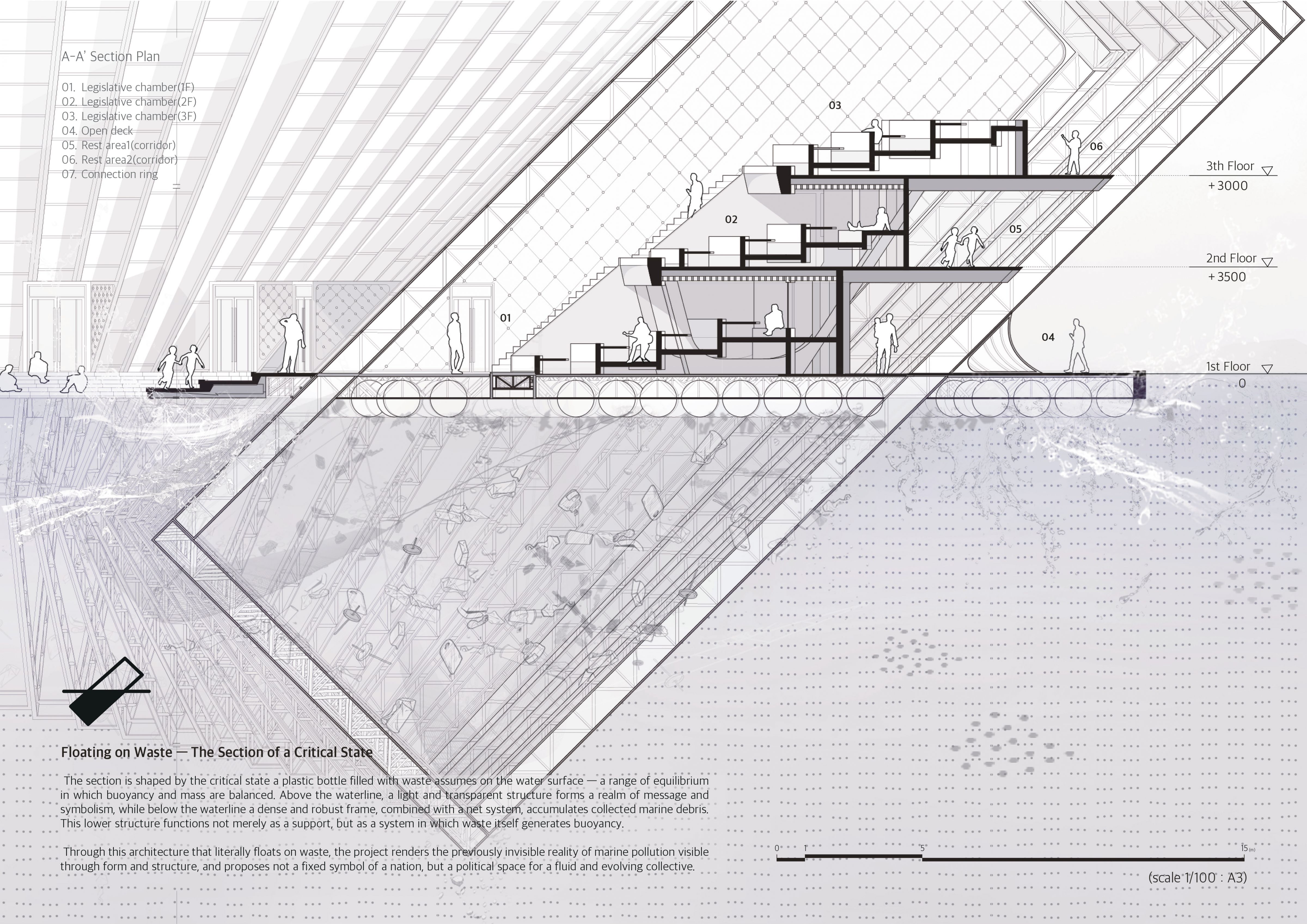
프로젝트의 핵심 개념은 건축의 단면 구조에서 드러난다. 수면 위에는 가볍고 투명한 구조가 형성되어 해양 쓰레기 문제를 논의하는 해양 의회의 공간이 된다. 반면 수면 아래에는 밀도 높은 프레임과 그물 시스템이 결합되어 수거된 해양 쓰레기를 축적하며, 폐기물 자체가 부력을 만들어내는 구조로 작동하도록 설계 하였다.
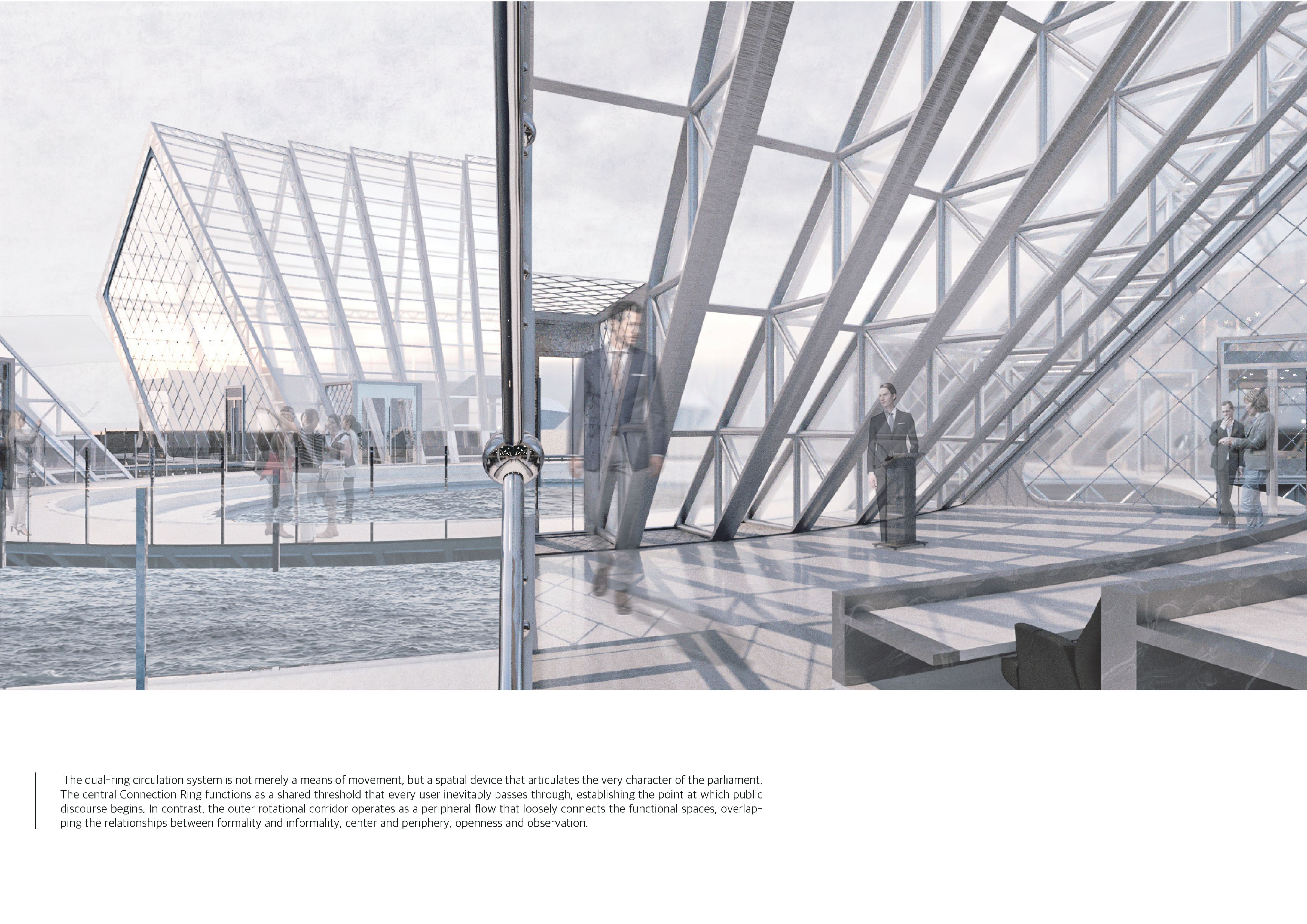
이처럼 문자 그대로 폐기물 위에 떠 있는 건축을 통해, 이 프로젝트는 그동안 보이지 않던 해양 오염의 현실을 형태와 구조로 가시화한다. 동시에 그것은 특정한 한나라만의 문제에서 끝나는 것이 아니라, 해양 환경을 둘러싼 문제를 논의하기 위한 유동적이고 변화하는 집합적 공동체의 정치적 공간을 제안한다.
-
This project begins with the observation of plastic bottles floating on the water, filled with waste. These bottles continuously change direction as they respond to wind and subtle currents on the water surface. This movement is not a singular event of rising caused by buoyancy, but can instead be understood as a continuous process of directional shifts generated through reactions to the surrounding environment.
Rather than reproducing this movement itself, Floating on Waste approaches it by spatializing its traces. The architecture is realized as a form that captures the distribution of directional changes occurring on the water surface, revealing in material form the traces of motion produced within a complex environmental condition. Here, the afterimage of motion refers to the accumulated traces of directional changes created as floating debris responds to its surroundings, representing a critical state that is neither fully stable nor unstable.
The core concept of the project is revealed in the architectural section. Above the waterline, a light and transparent structure forms a space for a marine assembly, where issues related to ocean waste are discussed. Below the waterline, a dense structural frame combined with a net system accumulates collected marine debris, designed so that the waste itself contributes to generating buoyancy.
Through this architecture that literally floats on waste, the project makes the previously invisible reality of marine pollution visible through form and structure. At the same time, it does not frame the issue as belonging to a single nation, but proposes a political space for a fluid and evolving collective that gathers to discuss the shared challenges surrounding the marine environment.
지도교수: 이상윤 교수님(안정우 연구원), 이대송 교수님(이현희 연구원)
<주최>
Young Architects Competitions
Floating On Waste
이 프로젝트는 물 위에 떠 있는, 내부에 쓰레기가 채워진 플라스틱 병에 대한 관찰에서 시작된다. 이 병은 바람과 미세한 수면의 흐름에 반응하며 물 위에서 지속적으로 방향을 바꾸며 움직인다. 이러한 움직임은 부력에 의해 상승하는 단일한 사건이 아니라, 주변 환경에 대한 반응 속에서 끊임없이 갱신되는 방향 변화로도 해석할 수 있다.
Floating on Waste는 이러한 움직임 자체를 재현하기보다, 그 흔적을 공간화하는 방식으로 접근한다. 건축은 수면 위에서 발생하는 방향 변화의 분포를 포착한 형식으로 구현되며, 이를 통해 복합적인 환경 속에서 형성되는 운동의 흔적을 물질적 형태로 드러내고자 하였다. 여기서 운동의 잔상이란 부유 쓰레기가 주변 환경에 반응하며 만들어내는 방향 변화의 축적된 흔적을 의미하며, 이는 완전히 안정되지도 불안정하지도 않은 임계 상태이다.
프로젝트의 핵심 개념은 건축의 단면 구조에서 드러난다. 수면 위에는 가볍고 투명한 구조가 형성되어 해양 쓰레기 문제를 논의하는 해양 의회의 공간이 된다. 반면 수면 아래에는 밀도 높은 프레임과 그물 시스템이 결합되어 수거된 해양 쓰레기를 축적하며, 폐기물 자체가 부력을 만들어내는 구조로 작동하도록 설계 하였다.
이처럼 문자 그대로 폐기물 위에 떠 있는 건축을 통해, 이 프로젝트는 그동안 보이지 않던 해양 오염의 현실을 형태와 구조로 가시화한다. 동시에 그것은 특정한 한나라만의 문제에서 끝나는 것이 아니라, 해양 환경을 둘러싼 문제를 논의하기 위한 유동적이고 변화하는 집합적 공동체의 정치적 공간을 제안한다.
-
This project begins with the observation of plastic bottles floating on the water, filled with waste. These bottles continuously change direction as they respond to wind and subtle currents on the water surface. This movement is not a singular event of rising caused by buoyancy, but can instead be understood as a continuous process of directional shifts generated through reactions to the surrounding environment.
Rather than reproducing this movement itself, Floating on Waste approaches it by spatializing its traces. The architecture is realized as a form that captures the distribution of directional changes occurring on the water surface, revealing in material form the traces of motion produced within a complex environmental condition. Here, the afterimage of motion refers to the accumulated traces of directional changes created as floating debris responds to its surroundings, representing a critical state that is neither fully stable nor unstable.
The core concept of the project is revealed in the architectural section. Above the waterline, a light and transparent structure forms a space for a marine assembly, where issues related to ocean waste are discussed. Below the waterline, a dense structural frame combined with a net system accumulates collected marine debris, designed so that the waste itself contributes to generating buoyancy.
Through this architecture that literally floats on waste, the project makes the previously invisible reality of marine pollution visible through form and structure. At the same time, it does not frame the issue as belonging to a single nation, but proposes a political space for a fluid and evolving collective that gathers to discuss the shared challenges surrounding the marine environment.